Six years before the main story
The Jones Family Loss
[Diana Jones](entity:character-recall-character-diana-jones-7a4992dbde4c) grew up in a loving household with her parents, [Cora Jones](entity:character-recall-character-cora-jones-4b62a0dea7ba) and [Derek Jones](entity:character-recall-character-derek-jones-be83a5c002f4), and her older half-brother [Connor Jones](entity:character-recall-character-connor-jones-3056cd42b581). Derek had previously been married to [Luna Jones](entity:character-recall-character-luna-jones-c1b167e132a3), whose bipolar disorder and decision to leave shaped [Connor](entity:character-recall-character-connor-49e9ac9fb7e5)’s childhood; Cora welcomed him into the family, though he sometimes kept emotional distance.
Six years before the main story
Diana Loses Her Parents
When Diana was nineteen, Cora and Derek died in a car crash caused by a drunk driver. Diana insisted on sitting her university exam the following day, but the shock and grief soon overwhelmed her; she abandoned her studies and lost a scholarship as her life narrowed into depression and isolation.
After her parents' deaths
Connor Brings Diana to Work
Seeing Diana’s grief deepen, [Connor](entity:character-recall-character-connor-49e9ac9fb7e5) brought her to work at the [Grace Hotel Cape Town](entity:location-recall-location-grace-hotel-cape-tow-b342be886dc4) and insisted that she begin helping around the hotel. At first she went along mainly because she did not want to disrupt his work, but contact with guests gradually gave her a reason to re-engage with the world.
After she begins working at the hotel
Diana Builds a Concierge Role
Diana discovered that she loved helping guests explore the city and began planning tailored outings for them. [Connor](entity:character-recall-character-connor-49e9ac9fb7e5) allowed her to test the idea, and the tours proved so popular that she became a specialised guide, even though the job had not existed before he created it.
William's childhood
William's Childhood Abandonment
[William King](entity:character-recall-character-william-king-f3934ba6d225)’s mother left after his parents’ divorce, and contact with her dwindled to an occasional birthday message. His father, [John King](entity:character-recall-character-john-king-ad180784a4b4), helped raise him, while William learned to fear that people he loved might disappear; that fear later colored his romantic relationships.
About seven years before the main story
William Marries Julia
During his early years in the family business, William fell quickly for [Julia](entity:character-recall-character-julia-dd9a6077f139) and married her. Their first year seemed happy, but her growing demands and dissatisfaction with his work schedule exposed a deepening imbalance in the marriage.
During William and Julia's marriage
The Pregnancy Revelation
When [Julia](entity:character-recall-character-julia-dd9a6077f139) announced that she was pregnant, William stayed in the marriage, hoping the child might repair their relationship. At a medical appointment, he learned that the pregnancy’s timing did not match his absence at a work conference and realized that he could not be the father.
About seven years before the main story
William Leaves Julia
William waited until they had left the doctor’s office before confronting the betrayal. He packed his belongings and contacted a lawyer; [Julia](entity:character-recall-character-julia-dd9a6077f139) first begged him to stay, then blamed him, and their marriage ended in divorce.
Years before the main story
A New King Household
[John](entity:character-recall-character-john-6bc68dc682c3) later married [Gloria](entity:character-recall-character-gloria-74d2fbb2cafc), who treated William as family rather than as a stepson. Their household eventually included [Tara King](entity:character-recall-character-tara-king-c340208183c3), William’s much younger half-sister, whose affection gave him a close family bond even as his earlier abandonment continued to trouble him.
Before the welcoming event
The Hotel's Financial Crisis
After a previous regional manager badly mismanaged the [Cape Town](entity:location-recall-location-cape-town-f6ea4334d11c) property, [Connor](entity:character-recall-character-connor-49e9ac9fb7e5) worked to restore its operations. The hotel nevertheless continued losing money, and its unusually large staff made a review of expenses and possible retrenchments likely.
Friday evening, at the start of the main story
William Takes Over
William arrived in [Cape Town](entity:location-recall-location-cape-town-f6ea4334d11c) to take control of the struggling hotel and assess how to make it more efficient. A formal welcoming event introduced him to the property, while [Connor](entity:character-recall-character-connor-49e9ac9fb7e5) prepared to work with the new executive despite worrying about what the review could mean for his employees.
Friday evening, during the welcoming event
The Elevator Power Outage
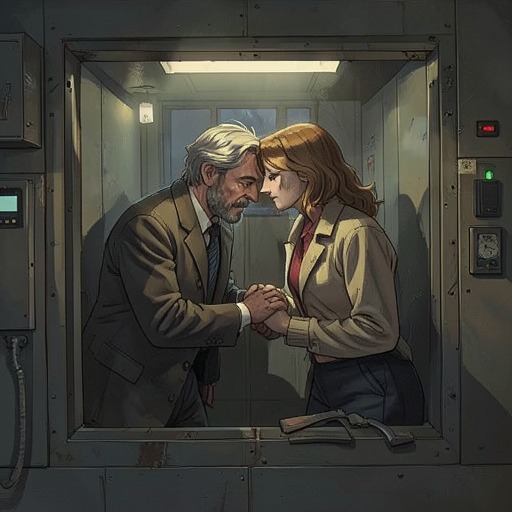
Running late for the celebration, Diana hurried into an elevator and nearly collided with William, whom she had never met. The lights failed soon afterward, the elevator stopped, and Diana struck her head as she lost her balance.
During the elevator outage
Strangers Find Common Ground
Diana told William she was claustrophobic, and he helped her steady her breathing while they waited for rescue. They talked about relationships, family, and their plans for the evening, building an unexpected intimacy in the darkness.
About thirty minutes after the outage began
The Elevator Confidences
The emergency operator told them that the power failure and the hotel’s failed generator could leave them trapped for up to half an hour. William stayed beside Diana, and she mentioned her inherited house and her uncertainty about the evening’s celebration without yet revealing her connection to the hotel.
Friday evening, when power returned
An Unfinished Elevator Goodbye
Once the elevator restarted, William helped Diana to her feet, and she stumbled against him as the doors opened. She left the encounter feeling unsettled by their closeness, while William watched her go without knowing her name or her role at the hotel.
Friday evening, after the outage
William Learns the Hotel's Condition
At the event, William questioned a nervous employee about how the hotel had handled the power failure. He learned that [Connor](entity:character-recall-character-connor-49e9ac9fb7e5) had calmed the guests and that the generator had taken about thirty minutes to return, adding a maintenance concern to the work he would need to address.
Friday evening, later at the welcoming event
The Stranger Is the New Boss
William found Diana again and asked her to share a drink, continuing their playful conversation. When [Connor](entity:character-recall-character-connor-49e9ac9fb7e5) arrived and identified William as the new general manager, Diana realized that the man she had flirted with would soon be evaluating her workplace.
Friday evening, shortly after the introduction
Diana Flees the Celebration
Diana pulled away from William once she understood who he was and left the event before they could speak further. She believed the hotel’s cost-cutting review could threaten her own job and regretted having flirted with the person who might decide her future there.
The following Monday morning
William Finds Diana at Work
William entered Diana’s office, mistakenly believing it belonged to [Connor](entity:character-recall-character-connor-49e9ac9fb7e5), and was pleased to see the woman from the elevator. Diana guided him toward her brother’s office without correcting his assumption that she was simply visiting.
Monday morning
A Near Confession Interrupted
William openly admitted that he was flirting with Diana, and she began to tell him she could not pursue him. [Kate](entity:character-recall-character-kate-ba739b4bb276) arrived before the conversation could go further, and Diana again concealed that she was an employee rather than [Connor](entity:character-recall-character-connor-49e9ac9fb7e5)’s visiting sister.
Monday, after William leaves
Diana Confides in Kate
Diana told [Kate](entity:character-recall-character-kate-ba739b4bb276) that she had hidden her job from William and feared that her specially created position would be an easy target for the efficiency review. Kate offered to organize support from coworkers, but Diana refused to ask them to risk their own jobs for her.
Monday, around lunchtime
The Lunch Invitation
[Connor](entity:character-recall-character-connor-49e9ac9fb7e5) invited Diana to join him and William for lunch, leaving her little room to avoid the man she was trying to keep at a distance. She accepted, and their conversation remained cordial as William spoke about the hotel’s future and Diana continued to hide her employment.
The following early morning
Diana Recounts Her Past
Before work, Diana reflected on how her parents’ deaths had left her adrift and how the hotel’s tours had helped her return to a fuller life. She feared that losing the job would strip away not just her income but a source of purpose she had fought to recover.
Several days after the welcoming event
Diana's Car Breaks Down
After a tour, Diana’s old [Citi Golf](entity:object-recall-object-citi-golf-5df9c71c40c3) began smoking and failed on the road; her phone battery was dead, and she could not call for help. She tried to walk back toward the hotel, misjudged the distance, and grew exhausted before a passing car stopped.
That afternoon
William Gives Diana a Ride
William recognized Diana and offered to give her a ride. He found out she had been walking in the wrong direction all along, so he drove her to her home in [Camps Bay](entity:location-recall-location-camps-bay-2d330e95800e) and asked about her job. She truthfully said she was a tour guide, but did not mention that she was his
During the drive to Camps Bay
A Confession of Passion
Diana described how she loved introducing visitors to [Cape Town](entity:location-recall-location-cape-town-f6ea4334d11c) and seeing familiar sights through their eyes. William admired her enthusiasm, but she added that her employer was downsizing, making the threat to her job more immediate.
That afternoon, at Diana's house
The First Kiss at Home
After William drove Diana home, she invited him in to have a drink, while [Connor](entity:character-recall-character-connor-49e9ac9fb7e5) arranged for someone to retrieve her car. The two shared intimate stories about their parents and the losses and wounds that shaped them, ending with a gentle first kiss
That evening
William Seeks Gloria's Advice
Troubled by his attraction to Diana and her concern about dating her brother’s boss, William visited [Gloria](entity:character-recall-character-gloria-74d2fbb2cafc). She urged him to speak with [Connor](entity:character-recall-character-connor-49e9ac9fb7e5) respectfully and to let Diana decide for herself, rather than treating the boundary as an insurmountable obstacle.
The following Sunday evening
William Calls Diana
As William prepared to travel for work, he called Diana and said he wanted to ask [Connor](entity:character-recall-character-connor-49e9ac9fb7e5)’s permission to date her. Diana stopped him, saying she would speak to her brother herself, then surprised them both by agreeing to go on a date with William.
The Friday after William's work trip
Diana and William's First Date
William returned and took Diana to a candlelit restaurant, where they agreed to focus on getting to know each other rather than discussing work. They shared stories about their families, childhoods, and fears, and their growing trust made the concealed employment relationship harder for Diana to ignore.
Later that Friday evening
A Walk Beside the Sea
After dinner, the couple walked barefoot along the beach and kissed again after Diana stumbled into William’s arms. He stopped their growing passion because they were in public, then drove her home through the rain and invited her to meet his family.
Saturday evening
Diana Chooses the Family Lunch
Diana canceled her regular lunch with [Connor](entity:character-recall-character-connor-49e9ac9fb7e5) so she could keep the promise she had made to William, while telling her brother only that she had plans. She worried that her growing feelings and the looming staff reductions would make the consequences of her hidden identity worse.
The following Sunday
Diana Meets the King Family
Diana met [John](entity:character-recall-character-john-6bc68dc682c3), [Gloria](entity:character-recall-character-gloria-74d2fbb2cafc), and Tara at the King family home. She saw the warmth between William and his family, especially his affectionate bond with Tara, and felt herself fall more deeply in love despite knowing that her place at the hotel remained uncertain.
During the King family lunch
Tara Recruits Diana
Tara led Diana to meet her cat Chester and later persuaded her to rehearse a Taylor Swift performance for the school talent show. Diana joined the rehearsal and performed with Tara for the family, only to realize that she might not still be working at the hotel by the time the show took place.
Later that Sunday
A Goodbye at Diana's Door
William walked Diana home, and they kissed intensely before [Connor](entity:character-recall-character-connor-49e9ac9fb7e5) unexpectedly arrived. Diana told William to leave so she could speak with her brother, forcing her to face the damage her secrecy could do to both the relationship and her family bond.
Sunday evening
Connor Confronts Diana
[Connor](entity:character-recall-character-connor-49e9ac9fb7e5) asked Diana what was happening and learned how she had met William, hidden her job, and continued seeing him. Diana admitted that fear for her job and fear of losing William had kept her silent; she also insisted Connor not use his position to protect her.
Monday morning
William Finds the Employee File
While reviewing staff records, William came across Diana’s employee file and recognized her photograph. He realized that the office he had visited was hers and that her explanation about being unable to date him because he was [Connor](entity:character-recall-character-connor-49e9ac9fb7e5)’s boss had concealed the more direct truth: he was her boss too.
Monday morning, shortly afterward
The Hidden Job Comes to Light
William confronted [Connor](entity:character-recall-character-connor-49e9ac9fb7e5), who confirmed that Diana worked at the hotel but said he had not known she kept that fact from William. William went to Diana’s office, angered by the discovery and convinced that their relationship might have been shaped by her desire to keep her position.
Monday morning
The Breakup Over the Lie
Diana tried to explain that she had not planned the deception and had become increasingly afraid as her feelings deepened. William believed she might have manipulated him to protect her job, and he left her office unable to trust the relationship they had begun.
Monday at lunchtime
The Staff Rally for Diana
[Kate](entity:character-recall-character-kate-ba739b4bb276), [Miranda](entity:character-recall-character-miranda-e73e6a842c34), Jim, and other coworkers gathered to tell Diana they wanted to help prove her value to the hotel. They cited the guests she had helped, the work she had done for colleagues, and the revenue her tours brought in.
Monday, during the staff gathering
Diana Is Let Go by Her Friends
Diana thanked her coworkers but told them that William already knew the truth and that their case might not be ready in time. She urged them to support one another through the layoffs, choosing solidarity over asking the staff to conceal or excuse her actions.
The following morning
Diana Recognizes Her Fear
At home, Diana understood that her fear of losing William had been tied to a deeper fear of being abandoned after her parents died. She had clung to the job and hidden the truth partly because she feared losing every source of stability at once.
During the layoffs and employee meetings
William Hears Kate's Defense
William began meeting with staff as the hotel carried out its reductions. When [Kate](entity:character-recall-character-kate-ba739b4bb276) defended Diana as a generous colleague who had acted from fear rather than selfishness, William resisted her plea but was forced to consider whether his anger was distorting his judgment.
That evening
Diana Apologizes and Confesses
Diana went to William’s hotel apartment and apologized for lying, explaining how grief had taught her to guard herself against loss. She told him she had fallen in love with him, but William was still too hurt to accept a clean restart and said he could not yet trust what their relationship had been.
About two weeks after the breakup
William Reconsiders Diana's Value
Reviewing Diana’s record and guest testimonials, William saw that the role [Connor](entity:character-recall-character-connor-49e9ac9fb7e5) had created had become a genuine asset to the hotel. He also recognized that his suspicion toward Diana was bound up with earlier betrayals, rather than solely with what she had done.
About two weeks after the breakup
William Asks to Start Again
William visited Diana at her office and apologized for his harshness. He admitted that her lie had made him fear he could not trust her, but that he wanted to believe the woman he had fallen for was still the person standing before him.
During their reconciliation conversation
Diana Keeps Her Options Open
Diana told William that she had applied for other positions and had received an interview invitation, because she could no longer rely on the hotel as her only source of security. William revealed that her record and strong testimonials made him unwilling to dismiss her, and encouraged her to attend the interview before deciding what she wanted.
After their conversation at the hotel
Diana and William Start Over
William and Diana agreed to rebuild their relationship without the secret between them. Their renewed closeness rested on Diana’s honesty about her fears and William’s willingness to forgive, even as the hotel’s staff reductions continued to reshape their work lives.
About two weeks after they reconcile
William Joins Diana's Tour
William surprised Diana by joining a custom cultural tour for two guests. Diana guided them through the [Bo-Kaap Museum](entity:location-recall-location-bo-kaap-museum-fa0ac8f9e5ec) and the surrounding neighborhood, showing William the care and expertise behind the work he had nearly overlooked.
Later that day
A Jealous Interlude
After the guests left, Diana teased William about his convenient presence on the tour and asked whether he had been jealous of the quiet guest. William denied it at first, then kissed her, and revealed that their own plans could begin because the afternoon tour had been canceled.
Later that afternoon
The Franschhoek Surprise
William drove Diana to [Franschhoek](entity:location-recall-location-franschhoek-28f60c55dd78), a town she had once described as part of a cherished childhood memory. He hoped to help her revisit the place and the sense of safety she associated with her parents, and her delight as they arrived reassured him that the surprise had been welcome.
Afternoon in Franschhoek
The Picnic and Love Confession
William brought Diana to a field like the one she had remembered from childhood and shared a picnic with her. Seeing her reconnect with that memory, he understood the depth of his love and said he was in love with her; Diana answered with joy and kissed him.
Later that afternoon, near dusk
A Future Together
As they rested on the picnic blanket, Diana asked whether William wanted marriage and a family someday. He said he did, and imagined that future with her, while privately recognizing that there was still something important from his past he had not told her.
The following day
Diana's Job Interview
Diana attended an interview for a concierge position at another hotel, determined to make a choice based on her own abilities rather than her brother’s support or William’s approval. The interviewer, [Julia Brown](entity:character-recall-character-julia-brown-ddebf7bbb72a), was warm and candid, and Diana left feeling the interview had gone well.
After the interview
Julia Reveals Her Past
As [Julia](entity:character-recall-character-julia-dd9a6077f139) walked Diana out, she asked about William’s well-being and then disclosed that she was his former wife. Diana learned that Julia had worked for Grace and realized that William had not told her about the marriage.
Shortly after leaving the interview
Diana Suspects a Hidden Child
[Julia](entity:character-recall-character-julia-dd9a6077f139)’s mention of a young son led Diana to calculate that the child might have been born during her marriage to William. She feared that William had concealed both an ex-wife and a child, and returned home shaken by how much she still did not know about him.
That afternoon
Diana Confronts William
When William arrived at her house, Diana asked when he had intended to tell her about [Julia](entity:character-recall-character-julia-dd9a6077f139) and the child. He apologized for not disclosing the marriage, then insisted that he was not the child’s father and began to explain the history she had just uncovered.
During their conversation at Diana's house
William Explains the Betrayal
William explained that he had stayed with [Julia](entity:character-recall-character-julia-dd9a6077f139) after she became pregnant, hoping a child would repair their troubled marriage. A doctor’s assessment of the pregnancy timeline showed that he could not be the father; William then left, and he had not seen Julia since the divorce.
That afternoon, after William's explanation
Diana Sets a Boundary
Diana believed William about the child but questioned why he had hidden such a defining part of his life. She realized that his past betrayal might have fueled the severity of his reaction to her own lie, and told him they could not be together until he worked through that pain.
Immediately after Diana sets her boundary
A Painful Separation
William kissed Diana before leaving, and she admitted she would wait for him. Once the door closed, she broke down, loving him but refusing to resume the relationship while his unresolved hurt could shape how he treated her.
During the following weeks
Gloria Urges William to Heal
At a family lunch, William finally told [Gloria](entity:character-recall-character-gloria-74d2fbb2cafc) that he and Diana were apart. Gloria reminded him that his mother’s departure and his marriage to [Julia](entity:character-recall-character-julia-dd9a6077f139) had left pain he had avoided confronting, and urged him to acknowledge it if he wanted a healthy future with Diana.
During the weeks after the separation
Diana Waits Without Surrendering
Diana continued to miss William while keeping enough distance to let him decide whether he was ready to change. She recognized that her old fear of abandonment had once driven her to cling to stability, but she no longer wanted fear to dictate the terms of love.
A Saturday morning before Tara's talent show
Gloria Invites Diana
[Gloria](entity:character-recall-character-gloria-74d2fbb2cafc) called Diana and invited her to Tara’s school talent show, explaining that William would be performing with his sister. Diana agreed to attend, but insisted that William—not his family—would have to be the one to come to her if he wanted them to reconcile.
The day of Tara's talent show
William Prepares for the Show
William wore an oversized pink tracksuit and rehearsed a dance with Tara, despite knowing that his own dancing was far from impressive. He had volunteered to take Diana’s place in the performance because Tara had expected Diana to join her, and he wanted his sister to feel supported.
That evening
Diana Attends the Talent Show
Diana arrived at the school and watched several children perform before Tara and William’s turn. William danced awkwardly in the matching outfit, making the audience laugh and cheer; his willingness to embarrass himself for Tara deepened Diana’s affection for him.
During the talent-show intermission
Diana Makes Peace with Tara
Tara admitted she had been sad that Diana was absent from the performance. Diana apologized and promised to visit and play with her, and Tara accepted the promise, restoring their affectionate connection.
During the talent-show intermission
William Asks for Another Chance
Away from the crowd, William told Diana that he regretted the pain he had caused and had recognized how fear from his past had shaped his choices. He asked for another chance, promising to build a relationship with her without letting his history stand between them.
That evening, after William's request
Diana and William Reconcile
Diana asked whether William was sure he was ready to face their future, and he answered with conviction. She accepted his request, kissed him, and told him she had not taken the outside job, choosing to remain at the hotel on her own terms.
Near the end of the novel
A Shared Happy Ending
William teased Diana about being able to boss her around at work, and she joked that she might show the staff the video of his talent-show dance. They chased and laughed together, with Diana looking toward a future in which love, trust, and a renewed sense of home could coexist.